
Fire Retardant Plywood: The Complete UK Guide
Fire Retardant Plywood: The Complete UK Guide
Fire retardant plywood is used across a wide range of commercial and creative projects where the versatility and strength of plywood are required alongside enhanced reaction-to-fire performance.
From film and television sets to theatre scenery, exhibitions, shopfitting and commercial interiors, specifying the correct sheet material can be an important part of meeting the requirements of a project.
But what exactly is fire retardant plywood, how does it differ from standard plywood, and what do classifications such as Euroclass B and Euroclass C actually mean?
In this guide, Creffields explains the important considerations when choosing fire retardant plywood in the UK.
What Is Fire Retardant Plywood?
Fire retardant plywood, commonly referred to as FR plywood, is plywood that has been manufactured or treated to provide enhanced reaction-to-fire performance compared with conventional untreated plywood.
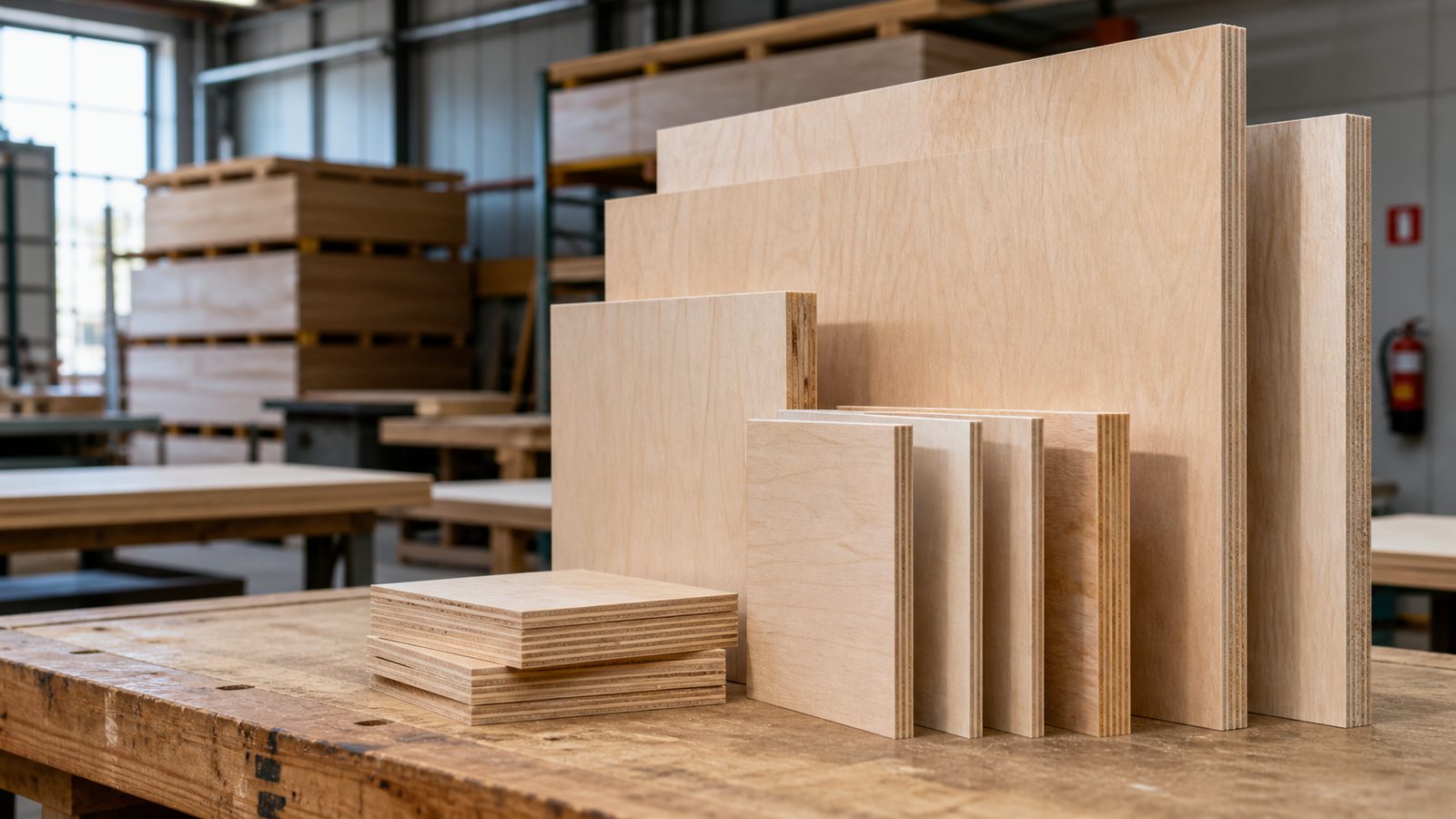
Plywood itself is manufactured from multiple layers, or veneers, of timber. These layers are bonded together, normally with the grain direction alternating between adjacent veneers.
This cross-laminated construction gives plywood many of its useful characteristics, including:
- Strength
- Dimensional stability
- Versatility
- Good machining properties
- A relatively high strength-to-weight ratio
- Availability in different grades and thicknesses
However, timber is combustible.
Where a project requires enhanced reaction-to-fire performance, appropriately classified fire retardant plywood may therefore be specified.
The key point is that not all plywood described as fire retardant necessarily has the same performance.
The specific product, classification, thickness, treatment and supporting certification should always be checked against the requirements of the project.
How Is Plywood Made Fire Retardant?
One method of producing fire retardant plywood involves treating the timber with specialist fire retardant chemicals.
A controlled impregnation process can be used to introduce the fire retardant treatment into the timber rather than simply applying a coating to the finished surface.
This is an important distinction.
A surface coating primarily affects the surface to which it has been applied, whereas an appropriate impregnation process introduces treatment into the timber itself.
Creffields supplies specialist fire retardant plywood, including products produced using controlled fire retardant treatment processes.
The treatment method and classification associated with the particular plywood should always be checked before specifying it for a project.
Is Fire Retardant Plywood Fireproof?
No.
The phrase “fireproof plywood” is frequently used when people search online, but it can create the wrong impression.
Fire retardant plywood is not a material that simply cannot burn.
Instead, it is designed and tested to demonstrate improved reaction-to-fire performance under specified conditions.
This is why professional specifications normally refer to classifications and standards rather than simply calling a product “fireproof”.
Terms such as:
fire retardant plywood
fire rated plywood
and
FR plywood
are generally more appropriate when discussing these products.
The precise performance should then be established from the product’s technical documentation.
Fire Retardant Plywood vs Standard Plywood
Both materials retain the fundamental characteristics associated with plywood, but they are intended for different circumstances.
| Characteristic | Standard Plywood | Fire Retardant Plywood |
|---|---|---|
| Timber veneer construction | Yes | Yes |
| Good strength-to-weight ratio | Yes | Yes |
| Machinable | Yes | Yes |
| Can be used for commercial projects | Yes | Yes |
| Enhanced reaction-to-fire performance | Not as standard | Yes |
| Defined fire classification | Product dependent | Yes, where tested and classified |
| Suitable for scenery/set construction | Yes | Often specified where enhanced fire performance is required |
| Technical fire documentation | Not normally FR specific | Should be available for the classified product |
Standard plywood remains appropriate for a huge range of applications.
Fire retardant plywood becomes particularly important where a project’s specification requires documented reaction-to-fire performance.
Understanding Fire Classifications
Fire performance can be a confusing subject because several terms are commonly used interchangeably.
In the UK and Europe, reaction-to-fire performance for construction products may be classified according to EN 13501-1.
The principal Euroclasses are:
A1
A2
B
C
D
E
F
These classifications indicate different levels of reaction-to-fire performance under specified test conditions.
Additional classifications may also describe factors such as:
- Smoke production
- Flaming droplets
- Flaming particles
For timber-based panels, classifications such as Euroclass B and Euroclass C can therefore be particularly relevant.
However, buyers should avoid assuming that every board marketed as FR plywood automatically achieves a particular Euroclass.
Always check the classification of the specific product being supplied.
Euroclass B Fire Retardant Plywood
Where a project requires Euroclass B performance, plywood specifically tested and classified for that requirement should be selected.
Creffields supplies Euroclass B fire retardant plywood for appropriate applications.
The complete classification should be checked because additional characters associated with the classification can provide information about smoke production and flaming droplets.
Thickness, substrate, mounting conditions and other factors can also be relevant to the scope of the classification.
This is why technical documentation is important when selecting FR plywood.
Euroclass C Fire Retardant Plywood
Creffields also supplies Euroclass C fire retardant plywood.
Depending on the project specification, Euroclass C material may provide the required performance without specifying a higher classification than necessary.
The correct choice should therefore be based on the actual project requirement rather than automatically assuming that a higher classification is needed.
Where the specification is unclear, clarification should be obtained from the responsible project professional.
Where Is Fire Retardant Plywood Used?
FR plywood can be used across numerous industries.
Creffields has particular experience supplying specialist sheet materials for:
- Film and television
- Theatre and scenery
- Exhibitions
- Events
- Shopfitting
- Commercial interiors
- Construction
- Display manufacture
Each sector can have different requirements, making access to technical information and appropriately classified products particularly important.
Fire Retardant Plywood for Film and Television
Film and television production can involve substantial quantities of timber and sheet materials.
Temporary sets may include:
- Internal walls
- Building facades
- Platforms
- Decorative structures
- Shop fronts
- Furniture
- Props
- Scenic structures
- Architectural features
Plywood is particularly useful because it combines relatively low weight with strength and versatility.
It can be cut, shaped and fabricated into an enormous variety of structures.
Where enhanced reaction-to-fire performance is required, fire retardant plywood can provide these practical characteristics while offering documented fire performance.
Creffields has a long history of supplying sheet materials to the film, television and scenery industries, making this one of our specialist areas.
Fire Retardant Plywood for Theatre and Stage Scenery
Theatre productions can require large quantities of temporary scenery.
Materials may be used for:
- Stage flats
- Platforms
- Scenic structures
- False walls
- Architectural features
- Props
- Decorative panels
Fire performance can be an important consideration within theatre environments.
FR plywood can therefore be useful where plywood’s structural and fabrication properties are required alongside an appropriate reaction-to-fire classification.
For decorative components where a very smooth painted surface is required, fire retardant MDF may also be worth considering.
The choice between FR MDF and FR plywood depends upon factors such as strength, weight, finish, machining requirements and the project’s fire specification.
Fire Retardant Plywood for Exhibition Stands
Exhibition contractors frequently work within strict venue and organiser requirements.
An exhibition stand can incorporate:
- Walls
- Floors
- Raised platforms
- Counters
- Display structures
- Storage areas
- Signage supports
- Decorative features
Individual exhibition venues may have requirements relating to the materials used within stands.
It is therefore important to establish those requirements before ordering materials.
Where appropriately specified, fire retardant plywood can provide a useful combination of strength, versatility and enhanced reaction-to-fire performance.
Fire Retardant Plywood for Shopfitting
Plywood is also widely used within commercial fit-outs and shopfitting.
Potential applications include:
- Retail display structures
- Counters
- Wall systems
- Shelving
- Fitted furniture
- Backing panels
- Decorative features
- Structural components
Depending upon the application and project specification, fire retardant plywood may be selected where enhanced reaction-to-fire performance is required.
FR Plywood or FR MDF?
One common question is whether fire retardant plywood or fire retardant MDF should be used.
There isn’t a universal answer.
Consider FR plywood when:
- Strength is particularly important
- Fixing performance is important
- A plywood structure is preferred
- Lower weight relative to some alternatives is advantageous
- The appearance of plywood is appropriate
Consider FR MDF when:
- An exceptionally smooth surface is required
- The material will be painted
- Detailed routing or profiling is required
- Decorative components are being manufactured
- A consistent homogeneous surface is important
Some projects use both.
For example, an exhibition or film set might use FR plywood for certain structural components and FR MDF for decorative surfaces and detailed features.
The fire classification required for each material should still be checked.
Can Fire Retardant Plywood Be Cut?
FR plywood can generally be cut and fabricated using appropriate woodworking equipment.
Depending on the product, this may include:
- Sawing
- Drilling
- CNC machining
- Routing
- Shaping
However, the effect of machining on the certified performance of a particular treated product should always be considered.
If a fire retardant treatment forms part of the board’s certified performance, technical guidance relating to machining, exposed edges or subsequent finishing should be followed.
Can Fire Retardant Plywood Be Painted?
FR plywood can often be painted or otherwise finished.
However, where a specific fire classification must be maintained, the effect of subsequent coatings should be considered.
Paints, decorative coatings, laminates and other finishes can potentially affect the behaviour of the complete system.
For projects where maintaining a particular classification is critical, consult the relevant technical documentation before applying finishes.
Can Fire Retardant Plywood Be Used Outside?
This depends on the specific plywood and treatment system.
Fire retardant performance and moisture/exterior durability are separate characteristics.
A board being fire retardant does not automatically make it suitable for permanent exterior exposure.
Likewise, plywood manufactured for exterior conditions is not automatically fire retardant.
The intended service environment, plywood specification, bonding class, treatment and manufacturer’s guidance should all be considered.
Creffields can help customers identify suitable sheet materials based on their project’s requirements.
What Thicknesses of Fire Retardant Plywood Are Available?
Fire retardant plywood can be available in a variety of thicknesses depending upon the particular product.
When choosing a thickness, consider:
- Required strength
- Span
- Weight
- Fixing requirements
- Intended application
- Machining requirements
- Fire classification
Importantly, don’t assume that a fire classification applying to one thickness automatically applies to every thickness of the same product.
Check the relevant technical documentation.
What Should I Check Before Buying FR Plywood?
Price and thickness shouldn’t be the only considerations.
Before ordering, establish:
1. The Required Fire Classification
Find out exactly what the specification requires.
Don’t simply request “fireproof plywood”.
2. Supporting Documentation
Check that appropriate technical documentation is available for the product.
3. Thickness
Ensure the required thickness is covered by the relevant product information and is appropriate for the intended application.
4. Intended Environment
Establish whether the board will be used internally, externally or in potentially damp conditions.
5. Finishing Requirements
Determine whether the plywood will subsequently be painted, laminated or otherwise covered.
6. Machining
If the material will be extensively cut, routed or machined, check any relevant guidance associated with the FR treatment and classification.
7. Quantity and Availability
For time-sensitive commercial projects, stock availability and delivery can be just as important as the specification itself.
Why Certification Matters
When a project requires fire retardant materials, being told that a board is “fireproof” or “fire rated” isn’t enough.
The important information is the tested and documented performance of the actual product.
Relevant documentation can help establish:
- Product identity
- Fire classification
- Applicable standard
- Thicknesses covered
- Test conditions
- Limitations of the classification
This becomes particularly important for commercial projects where contractors, venues, building-control professionals or other responsible parties may request evidence relating to the materials being used.
Choosing a Fire Retardant Plywood Supplier
Specialist products require more than simply having sheets available for sale.
A good FR plywood supplier should be able to provide clear information about:
- Available products
- Fire classifications
- Sheet dimensions
- Thicknesses
- Treatment
- Technical documentation
- Stock availability
- Machining options
- Delivery
Experience supplying the industries in which FR materials are frequently used is also valuable.
Fire Retardant Plywood from Creffields
Creffields supplies specialist plywood, MDF and timber-based sheet materials to customers throughout the UK.
Our range includes fire retardant plywood, with options suitable for projects requiring specified reaction-to-fire performance, including Euroclass classifications.
Creffields has extensive experience supplying materials to sectors including:
- Film and television
- Theatre and scenery
- Exhibitions and events
- Shopfitting
- Commercial interiors
- Construction
- Timber and building merchants
Alongside FR plywood, Creffields supplies fire retardant MDF and a comprehensive range of specialist sheet materials.
Technical information and supporting product documentation are also available to help customers and specifiers select appropriate materials.
Frequently Asked Questions
What is fire retardant plywood?
Fire retardant plywood is plywood manufactured or treated to provide enhanced reaction-to-fire performance compared with conventional untreated plywood. Its performance should be confirmed from the classification and technical documentation associated with the particular product.
Is fire retardant plywood fireproof?
No. FR plywood should not simply be described as completely fireproof. It is designed and tested to provide improved reaction-to-fire performance under specified conditions.
What does FR plywood mean?
FR plywood generally means Fire Retardant Plywood.
What is Euroclass B plywood?
Euroclass B plywood is plywood with a reaction-to-fire classification within Class B according to the relevant testing and classification requirements. The complete classification and conditions under which it applies should always be checked.
What is Euroclass C plywood?
Euroclass C plywood is plywood classified within Euroclass C for reaction-to-fire performance. Whether Euroclass B or C is required depends upon the project’s specification.
Is fire retardant plywood stronger than normal plywood?
Fire retardant treatment should not be confused with structural strength. Strength depends upon the plywood construction, species, grade, thickness and other characteristics.
Is fire retardant plywood waterproof?
Not necessarily. Fire performance and moisture resistance are separate characteristics. Check whether the specific plywood is suitable for the environmental conditions in which it will be used.
Can FR plywood be painted?
It can often be painted, but coatings and finishes should be considered where maintaining a specified fire classification is important. Refer to the relevant technical information.
What’s better, fire retardant plywood or fire retardant MDF?
Neither is universally better. FR plywood may be preferable where strength and fixing performance are important, while FR MDF can be particularly suitable for smooth painted surfaces and detailed machining.
Need Fire Retardant Plywood for Your Project?
Choosing the correct FR plywood involves more than selecting a sheet size and thickness.
Fire classification, application, treatment, environment and supporting certification should all be considered.
Creffields has extensive experience supplying specialist fire retardant sheet materials to the film, television, theatre, exhibition, shopfitting, construction and commercial interiors industries.
If you’re unsure which fire retardant plywood is appropriate for your project, contact Creffields to discuss the required classification, thickness, availability and technical documentation.